Elin Morrow
Elin Morrow works on Ynys Môn, mostly early, mostly alone. She has walked most of this coastline enough times to know which bench catches the last sun and which path floods first at high tide. That familiarity is where the work starts. Not a grand idea, just a place she already knows, looked at one more time.
She doesn't paint. She builds.
A finished piece begins as a folder. Thirty or forty photographs of the same headland, taken across three years and four seasons. A pencil sketch made in the car with the heater on. A small watercolour study that failed on paper and works perfectly as a texture. A note that says nothing more useful than “green, almost black, ten past seven”. Back at the screen she layers all of it, cuts it apart, works over it, throws out most of it, and keeps going until what's on the screen matches what she remembers standing there.
She is still not entirely sure what to call that middle part. It isn't quite memory and it isn't quite invention.
Most of what she makes goes up for sale eventually. Two pieces never will. One shows two small figures walking down to a beach on Rhoscolyn, unhurried, backs to the camera. It isn't the most accomplished thing she's made. It isn't going anywhere either.
Elin doesn't do studio tours or artist talks, and she'd rather you looked at the work than read about her. What she will say is this: the island keeps changing the same handful of views just enough that she hasn't run out of reasons to go back.
The island stays. Everything else is passing through.
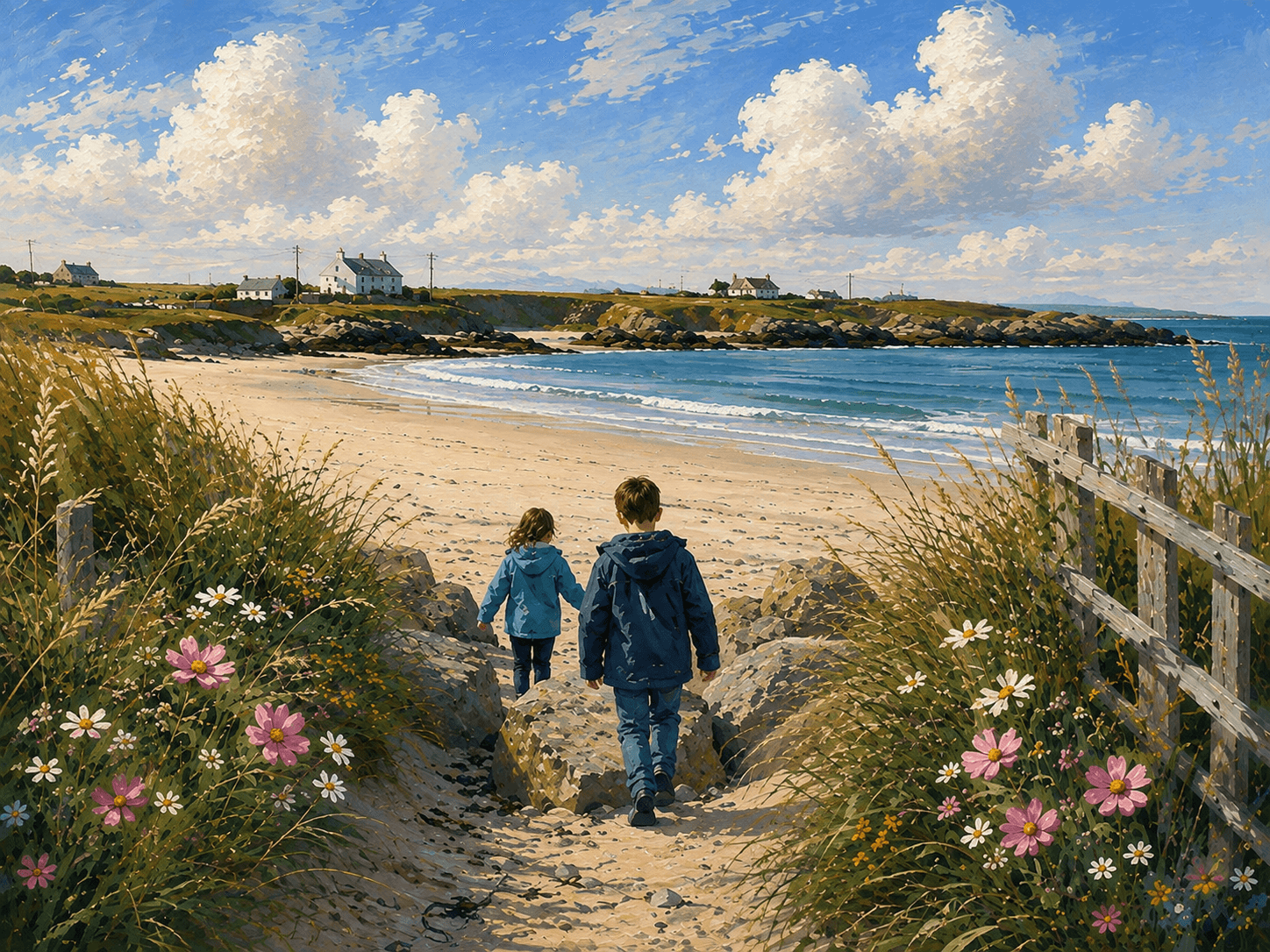
From the coast path to the finished piece.
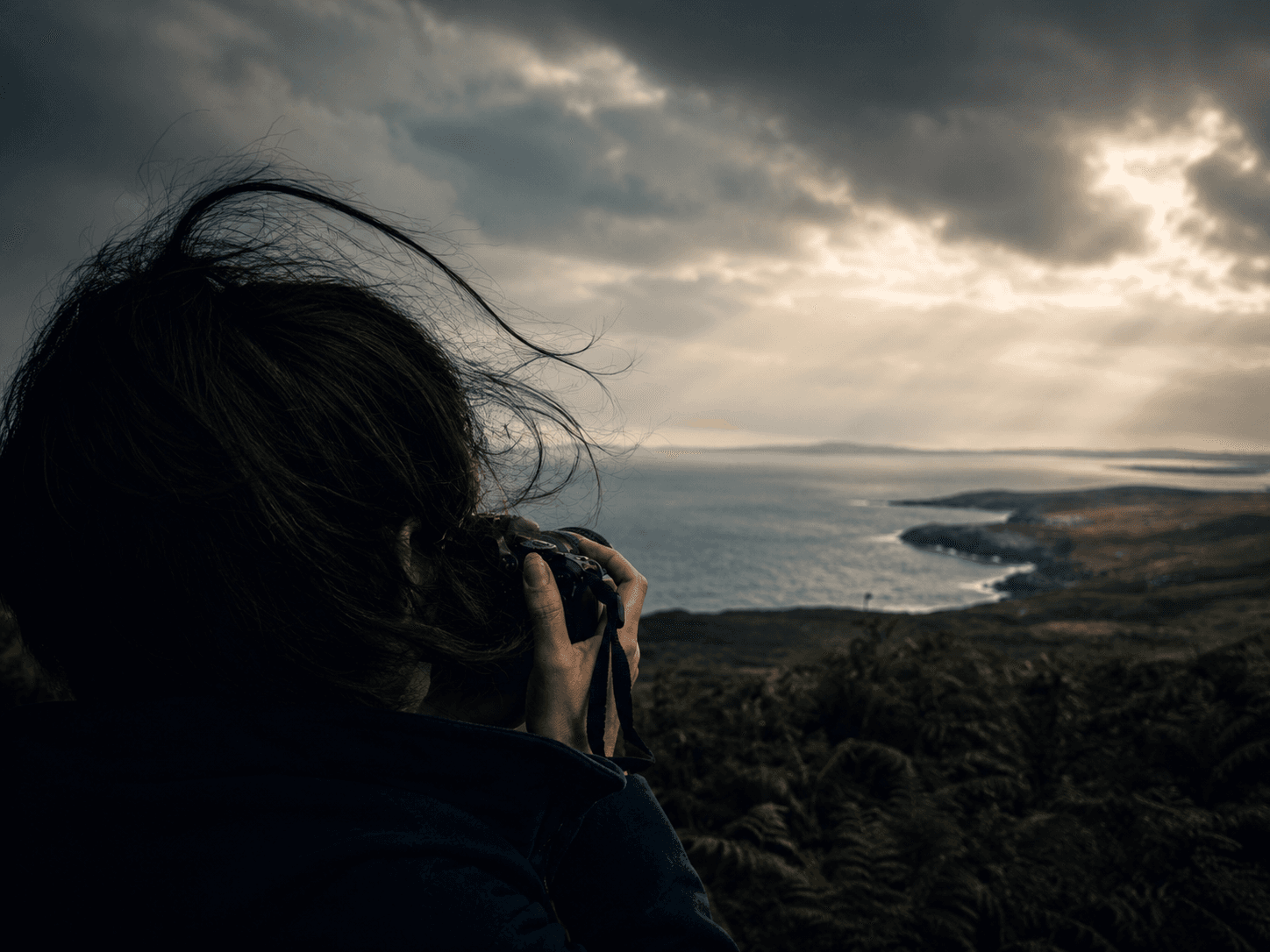
Most days start on foot, camera in one pocket, a folded sketchbook in the other. She knows this coastline by which gate sticks and which path floods first. Nothing is planned. If the light is wrong she comes back tomorrow.
Photographs, dozens of them, of the same rock from four angles. A few pencil lines and a colour note. Sometimes twenty minutes with a small board and a tube of watercolour, made to be looked at later and never to be shown. All of it is raw material.
Back at the screen the sources are layered, cut, scaled, worked over and thrown out. A single piece can carry forty photographs, two studies and a scanned page of marks made with the wrong end of a brush. This is where the work happens, and it takes far longer than the walk.
What she does in the last few hours before a piece is finished stays private. It's the one thing Elin won't put on the website.
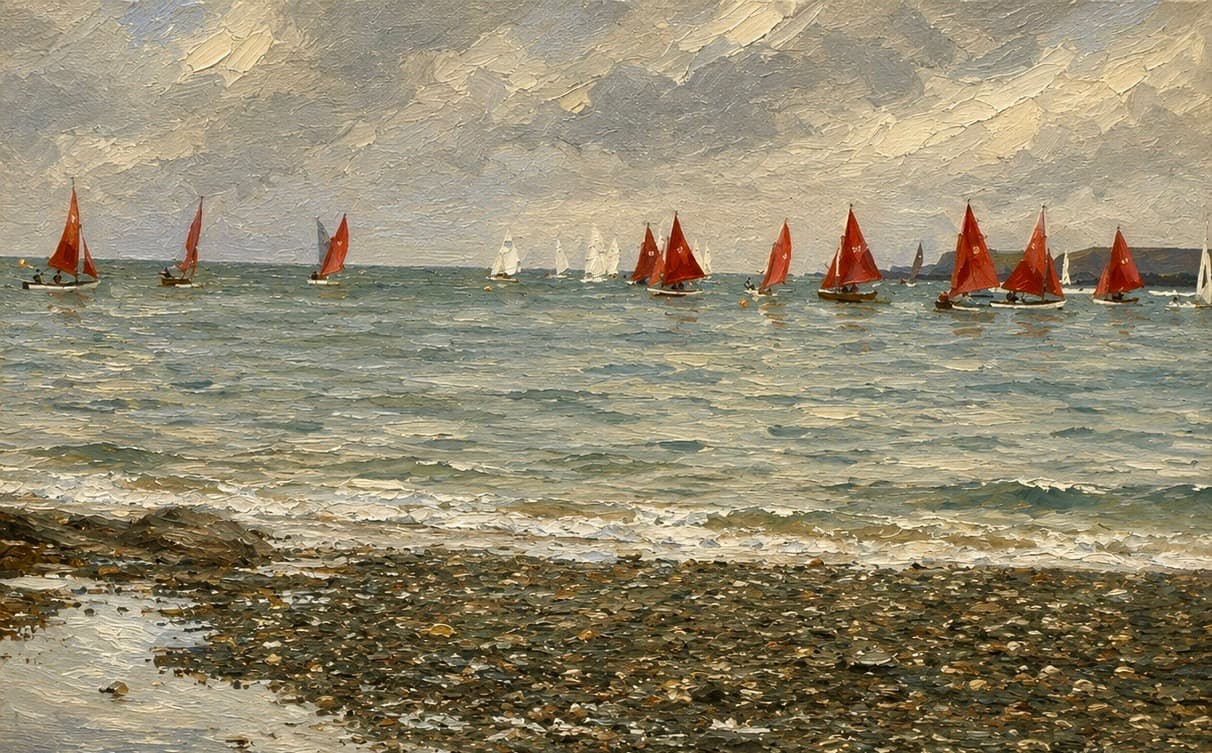
She'll tell you about the work. Not much else.
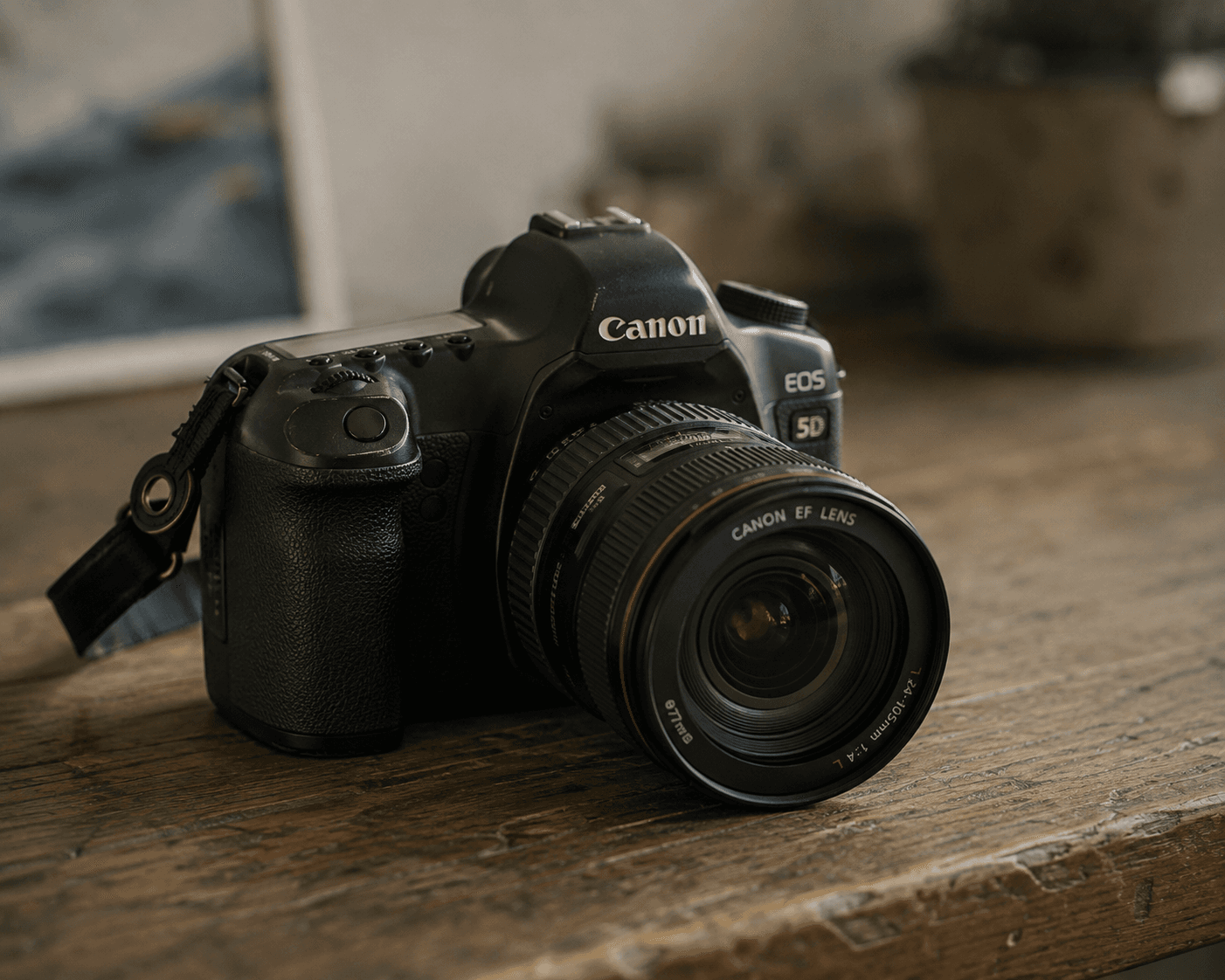
The kit that doesn't leave the boot of the car.
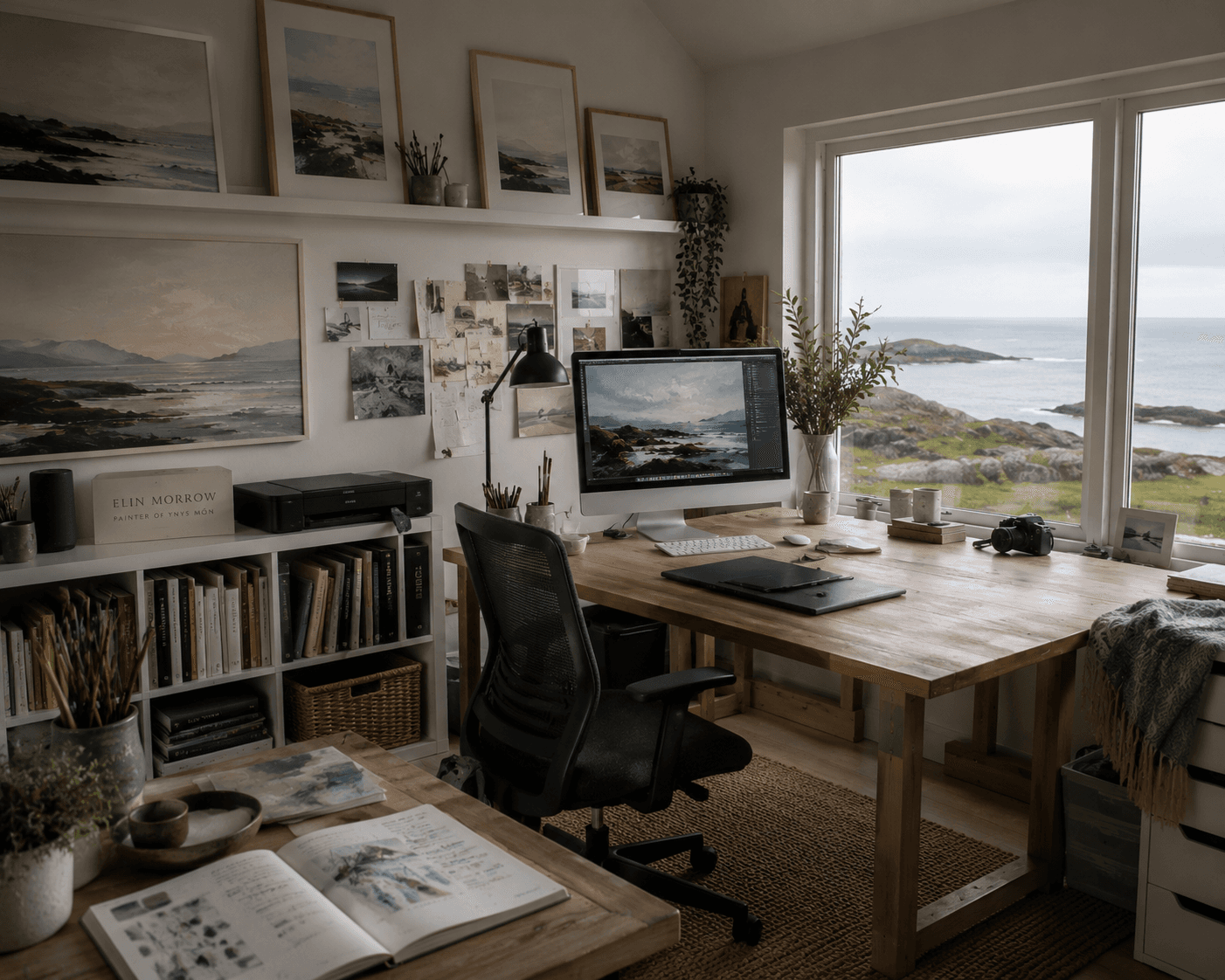
Working with a view of the water she's about to draw on again.
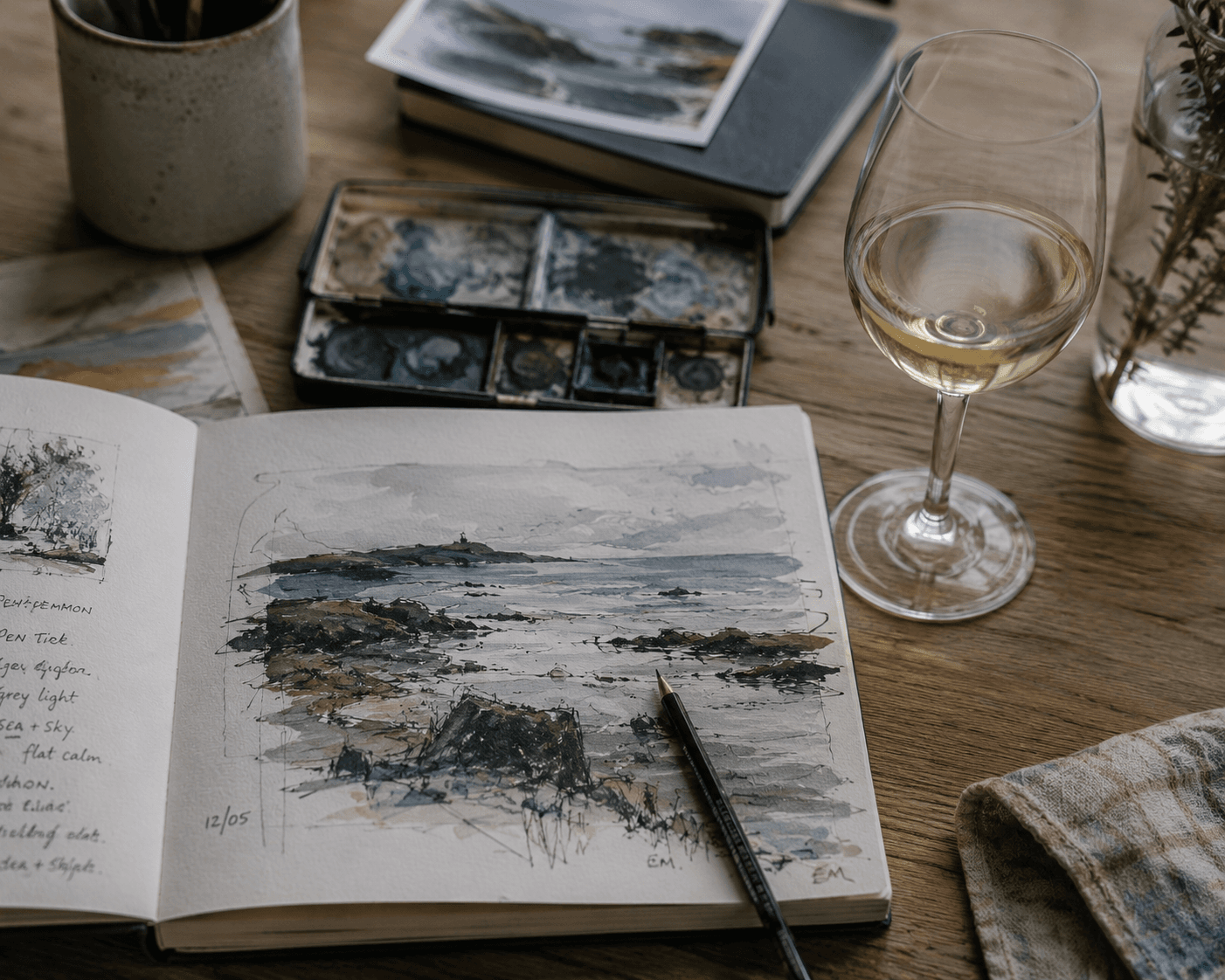
A study made to be looked at later, never shown.